Wondering what actually works for your vagus nerve?
Can Vagus Nerve Stimulation Help With Chronic Pain?
Evidence-reviewed by Vagus Lab Research Team |Last updated July 29, 2026|8 min read
The vagus nerve regulates pain sensitivity by controlling inflammation and communication between the brain and affected areas. Research suggests improving vagal tone through techniques like breathwork, cold exposure, and exercise may enhance the body's natural pain resilience over time.
Ever notice how pain feels worse when you're stressed? That throbbing headache becomes unbearable during a work crisis. Your back pain flares when life gets chaotic. This isn't just in your head—it's your nervous system at work.
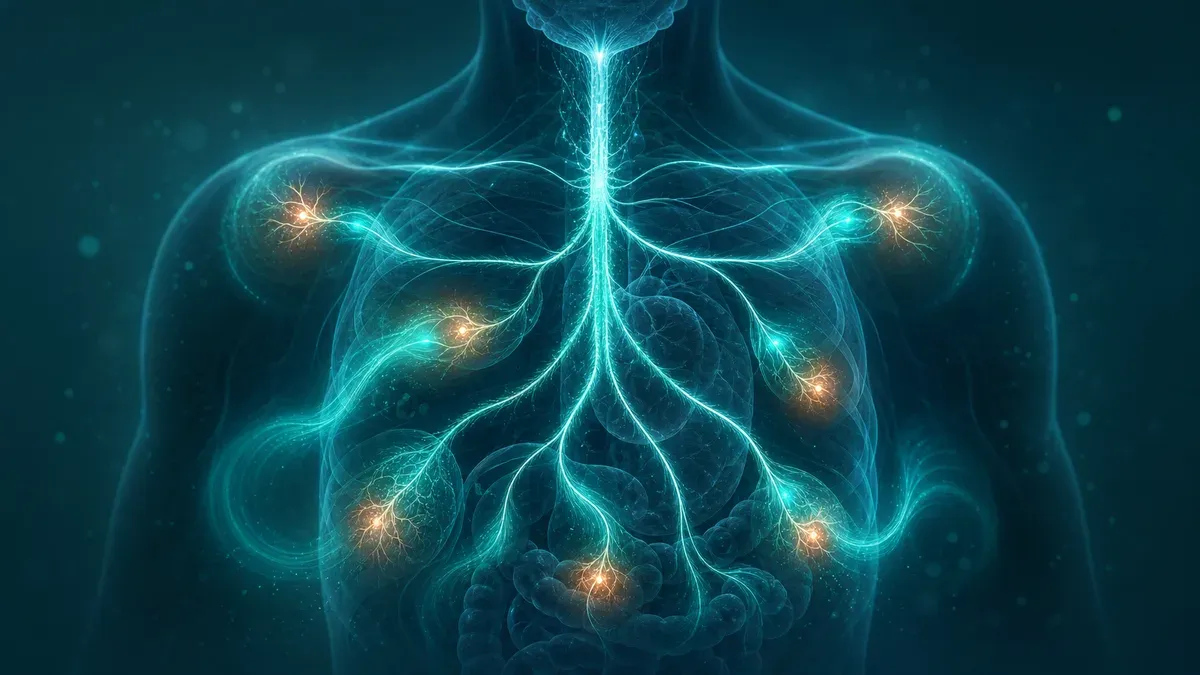
Your vagus nerve acts as a key link between your brain and body, directly shaping how you process and cope with pain signals. Preliminary research suggests that improving vagal tone through simple techniques may help support your body's natural pain resilience and promote better pain management over time1.
How Does the Vagus Nerve Affect Pain Processing?
Your vagus nerve doesn't just carry signals about hunger or heart rate. It plays a big role in your pain response system.
When pain signals fire through your body, your vagus nerve helps decide how strongly you feel them. A well-functioning vagus nerve can dial down pain sensitivity by releasing neurotransmitters like acetylcholine that dampen pain signal transmission at the spinal cord level. It's like having a biological gatekeeper that can filter which pain messages reach your brain's conscious awareness.
The nerve also manages inflammation throughout your body. Many long-term pain conditions involve ongoing inflammation. A stronger vagal response may help regulate that inflammatory response from becoming overwhelming2.
Research shows vagus nerve stimulation can produce anti-inflammatory effects. It does this by reducing immune system overactivity. This matters because inflammation often amplifies pain signals. It's like a smoke alarm that keeps blaring even after you've cleared the smoke.
Understanding this gatekeeper function raises an important question about practical applications.
Can Improving Vagus Nerve Tone Help With Long-Term Pain?
Early research shows it might. Studies show that vagus nerve stimulation looks promising for various long-term pain conditions. These include fibromyalgia, ongoing abdominal pain, and headaches2.
Here's what happens when your vagal tone improves:
Your nervous system gets better at shifting from high-alert mode to healing mode. Many people with long-term pain get stuck in fight-or-flight. Pain signals stay amplified. A healthier vagus nerve helps your body recognize when it's safe to relax and recover.
The nerve-inflammation connection also works in your favor. Better vagal function may help control the immune responses that fuel long-term pain conditions.
But here's the thing: the research is still developing. While early results look promising, we're not talking about a cure. Think of vagus nerve work as one tool in a broader pain management approach.
What Natural Techniques May Support Vagal Tone for Pain Relief?
You don't need special equipment to start supporting your vagus nerve. Several accessible techniques show promise:
Cold water exposure activates your dive reflex, naturally slowing your heart rate and boosting vagal tone. Start with 30 seconds of cold water on your face or wrists, gradually building to 1-2 minutes. Try this 2-3 times daily. This could help your body's overall stress response and resilience.
Breathwork offers targeted vagal stimulation. Try the 4-7-8 pattern: inhale for 4 counts, hold for 7, exhale for 8. Practice this sequence 3-4 times, twice daily. Box breathing (4-4-4-4 pattern) works well too. Both patterns activate the parasympathetic nervous system.
Regular exercise, especially endurance activities 3-4 times weekly and interval training twice weekly, appears to improve vagal tone. It also provides its own pain management benefits. The combination may be particularly powerful for building long-term resilience.
Heart rate variability (HRV) training uses biofeedback to teach you how to control your heart rhythm patterns. This directly trains vagal function. Apps can guide you through 5-10 minute sessions daily, helping you learn to shift your nervous system into recovery mode.
Yoga and meditation create a double benefit. These practices directly boost vagal activity while teaching your nervous system how to shift into calm states more easily. Aim for 15-20 minutes daily3.
Some people also explore vagus nerve stimulation devices for more consistent daily support. These wearable devices provide targeted electrical pulses to stimulate the nerve directly.
How Long Does It Take to Notice Pain Relief Benefits?
This varies significantly from person to person. Some people report feeling calmer and more resilient within days of starting vagus nerve practices. Others need weeks or months to notice changes in their pain levels.
The key is consistency rather than intensity. Your vagus nerve responds better to regular, gentle stimulation than to occasional intense sessions.
Keep in mind that building pain resilience—your ability to maintain function and emotional stability despite pain—differs from instant pain relief. You're essentially training your nervous system to handle pain better over time. That's a process, not a quick fix.
Are There Risks to Consider?
Most natural vagus nerve techniques are low-risk for healthy adults. But some precautions apply:
Cold exposure and intense exercise should be approached gradually. If you have heart conditions, autoimmune issues, or other chronic health problems, check with your healthcare provider first.
Vagus nerve work is supportive care. It's not a replacement for medical treatment. If you have chronic pain, continue working with your healthcare team. These techniques work best as part of a comprehensive approach.
Discuss vagus nerve techniques with your doctor before incorporating them into your pain management plan. This is especially important if you're considering reducing medications or making major changes to your treatment approach.
The Bottom Line on Vagus Nerve and Pain Resilience
Your vagus nerve influences how your body processes pain signals and manages inflammation. While research is still developing, improving vagal tone through natural techniques may support your body's ability to cope with pain more effectively.
The most promising approaches combine multiple strategies: breathwork, movement, cold exposure, HRV training, and stress management. The goal isn't to eliminate pain entirely. It's to build your nervous system's resilience so pain doesn't dominate your daily experience.
Whether you try breathing exercises, cold showers, or explore heart rate variability training, remember that building resilience takes time. Be patient with the process and celebrate small improvements along the way.
Frequently asked questions
How does the vagus nerve affect pain processing?
The vagus nerve acts like a volume control for pain signals, helping determine how strongly you feel them. It manages inflammation throughout the body, which often amplifies pain signals in chronic conditions. A well-functioning vagus nerve may help reduce pain sensitivity by improving brain-body communication and controlling immune system overactivity that fuels ongoing pain cycles.
Can strengthening the vagus nerve help with chronic pain?
Early research suggests it may help support pain management. Studies show vagus nerve stimulation shows promise for conditions like fibromyalgia and chronic headaches. Better vagal tone may help the nervous system shift from high-alert mode to healing mode, while also helping control inflammatory responses that contribute to chronic pain conditions.
What natural techniques stimulate the vagus nerve for pain relief?
Several techniques show promise: cold water exposure activates the dive reflex and boosts vagal tone, regular exercise (especially endurance and interval training) improves vagal function, and breathwork or yoga practices directly stimulate the vagus nerve while teaching stress management skills. Some people also explore vagus nerve stimulation devices for targeted daily support.
How long does it take to notice pain relief benefits from vagus nerve work?
Results vary significantly between individuals. Some people report feeling calmer and more resilient within days, while others need weeks or months to notice changes in pain levels. The key is consistent, gentle practice rather than intense sessions. Building pain resilience is a gradual process of training the nervous system, not instant relief.
Are vagus nerve techniques safe for people with chronic pain?
Most gentle techniques like breathing exercises are generally safe, but individual health conditions vary. People with chronic pain often have complex medical situations requiring oversight. Cold exposure and intense exercise should be approached gradually. Always discuss new wellness practices with your healthcare team, especially if considering changes to existing treatments.
The Vagus Lab Research Team reviews the latest scientific evidence on vagus nerve stimulation and translates it into accessible health education content.