Device review
Nurosym review: what the research actually shows, and who it is wrong for
Our verdict
Nurosym: $900, sold as Nuropod in the US
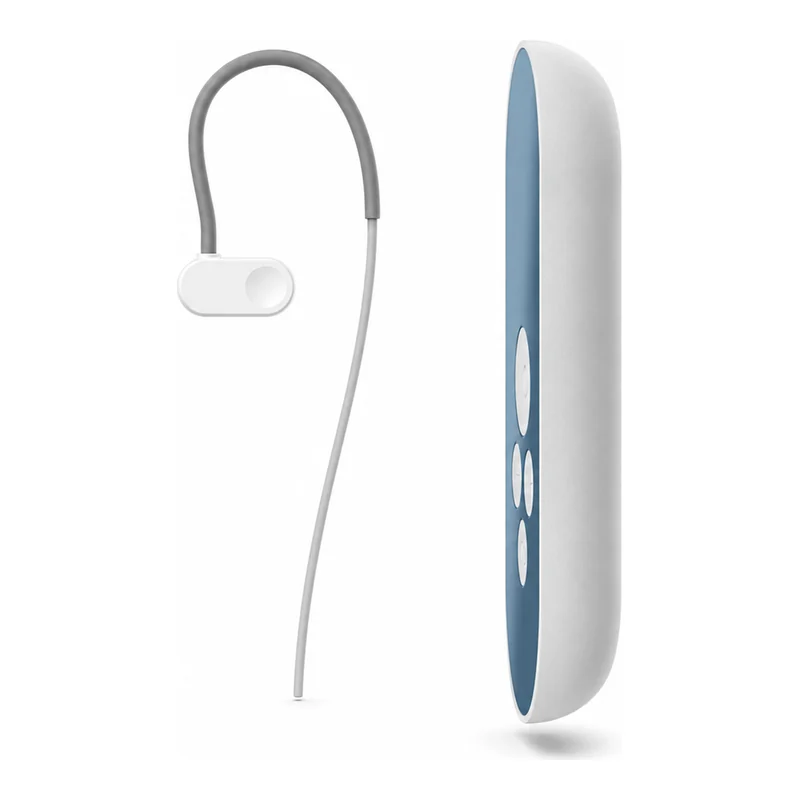
Nurosym/Nuropod is one device, not two: the same Parasym ear clip, sold as Nuropod in the US and as Nurosym everywhere else.
Nurosym/Nuropod has the strongest evidence position of any consumer vagus nerve device, and it is the only one in this category where published trials name the hardware itself rather than the method in general. It is also the most demanding to actually use: a wired clip on your ear, 30 to 60 minutes a day, sitting still.
Best for people who want the device with a real published record behind it and who will genuinely sit for a daily session.
Not for anyone who wants something quick, hands free, or cheap, and a poor fit if your nervous system runs sensitive.
Check the current Nurosym price- No subscription
- CE certified medical device
- 30-Day Returns
Disclosure: Vagus Lab may earn a commission if you buy through links on this page. It does not change how we score devices. Our method is published and applied the same way to devices we have no commercial relationship with.
Nurosym and Nuropod are the same device
Parasym sells the same ear clip as Nurosym in Europe and the UK, and as Nuropod in the United States. Same hardware, same company. If you have been reading reviews of both and they sound identical, that is why.
| Listing | Price | Market |
|---|---|---|
| Nurosym | 700 EUR | EU and UK |
| Nuropod, single device | $900 | US |
| Nuropod, dual device | $1,800 | US |
US buyers pay somewhere around $100 more than the euro price converts to. That is ordinary regional pricing: duties, distribution, local support and warranty handling all sit differently. Buy it in your own market so the warranty and support are local.
The evidence, checked properly
This is the reason to consider the device at all, so it is worth being exact, and exactness here required reading past the abstracts.
The POTS trial. A sham controlled, double blind randomized trial published in JACC: Clinical Electrophysiology in February 2024. Stimulation was delivered through an ear clip on the tragus, one hour daily, over two months, in postural tachycardia syndrome. Postural heart rate increase was significantly lower in the active group than in the sham group, and no device related side effects were reported.
The abstract describes only "an ear clip". The full text methods name the hardware: a Parasym device, Parasym Health. So this is Parasym's own device in a sham controlled trial, which is more than any other consumer device in this category can show.
The honest caveat: it is small. Twelve participants active, fourteen sham.
The long COVID pilot. Published in Frontiers in Neurology in 2024, in a female cohort, using 30 minute sessions twice daily. The methods name the Parasym AVNT system directly. Pilot study, so early stage evidence rather than confirmation.
The 60 plus claim. Parasym advertises "60+ completed clinical studies" and publishes citations for four of them. We could not check the rest, because the list is not published in a form a buyer can verify. The number may well be accurate. It is simply not something you can confirm before spending $900, and we are not going to repeat it as fact.
What this adds up to. Two named studies, one of them a proper sham controlled randomized trial, both small. That is a genuinely stronger position than the rest of the consumer market, and it is still early evidence rather than settled proof. Nurosym does not treat anything and does not replace care from a clinician.
The mistake people make with this device
With cheaper neck devices, the common failure is under-dosing: people never turn the intensity up. With Nurosym the failure runs the other way.
The recommended protocol is 30 to 60 minutes a day. For a nervous system that is already sensitized, that is a large dose, and public discussion contains a consistent pattern of people describing over-activation rather than calm. One user described feeling wired and oversensitive, cut sessions down to five minutes, still felt it, and moved to every other day before deciding whether to return it. Another, who had been in a clinical trial of a vagus nerve device, recognized the pattern: more ideas, more sociability, more energy, and alongside it a sensitivity that was not comfortable.
This is not evidence the device is broken. It reads like a dose response, and it is the single most useful thing to know before you start. If you are coming to this from chronic fatigue, long COVID, dysautonomia or a sensitized nervous system, start well below the recommended protocol and increase slowly. Ten minutes is a legitimate starting point. The marketing will not tell you that.
The practical problem, keeping it on your ear
The single most common complaint that has nothing to do with the biology: the clip does not stay on everyone's tragus.
Multiple users report exactly this, and at least one returned the device for that reason alone after being unable to keep the earpiece attached. Ear anatomy varies and the clip does not adapt to all of it.
There is no way to know in advance whether it will fit yours, which makes the return window the thing to pay attention to. More on that below.
Specifications
| Price | $900 US, 700 EUR in Europe |
|---|---|
| Placement | Clipped to the ear tragus, one ear |
| Session length | 30 to 60 minutes, daily |
| Hands free | No, wired ear clip |
| App or subscription | None, and nothing to pay after purchase |
| Battery | Lasts weeks between charges |
| Regulatory status | CE certified medical device |
| Warranty | 2 years device, 6 months earpiece electrode |
| Returns | 30 days |
| US extras | HSA and FSA eligible |
What it is like to live with
The good reports are specific rather than vague. One user tracking with an Oura ring over two months described stress trending down and restorative time trending up, starting from around week two. Another, dealing with long COVID and POTS, was skeptical enough to consider returning it unopened and did not. A third runs 60 minutes in the early morning, or splits it 30 and 30 across morning and bedtime.
The friction is the hour. Every positive report above is from someone who built a real daily block around it. If that block does not exist in your day, the device will not create it.
The criticism clusters in three places: the price, the earpiece fit, and the return process. There is also a large thread arguing the whole thing is overpriced relative to a generic TENS unit. That argument is worth taking seriously and we deal with it below.
No subscription, and why that matters more than it sounds
Nurosym has no app, no account, and nothing to pay after the purchase. The device runs standalone.
That reads like a small detail next to a $900 price tag. It is not. Devices in this category increasingly gate programs behind a paid tier, and several require a phone connection to run at all. Nurosym is the counterexample people cite when they complain about that pattern elsewhere. Over several years, a device with nothing after the purchase can close more of the price gap than the sticker suggests.
The consumable to budget for is the replacement electrode, which carries a 6 month warranty.
Is a cheap TENS unit the same thing
It is the most common objection to this device, given the price, and it deserves a real answer.
A generic TENS unit with an ear clip does deliver current to roughly the same place, costs around $40, and some users report tracking real changes in their own HRV with one. Nobody should pretend otherwise.
What $900 buys is the specific thing this page is about: this device, at these parameters, is the one that appears in the published trials. The stimulation profile in those studies was 20 Hz at 1 mA below discomfort threshold, delivered by this hardware. A TENS unit is a general purpose device where you choose the settings yourself, and the research does not transfer to your settings automatically.
We went looking for the counter-evidence rather than assuming. Searching our research index for a trial that delivered ear stimulation through an ordinary consumer TENS unit turns up nine studies that mention one, and every single one, read in full, resolves into something else: this device described generically in its own abstract, a stimulator built for the study by a research institute, another named brand, an animal experiment, or an abstract that never names the hardware. We could not confirm one. That is not evidence a TENS unit fails. It is the absence of evidence that it works, which is a weaker claim than the marketing on either side would like.
So the honest framing is not "TENS is a scam" or "Nurosym is a ripoff". It is: if what you want is the configuration that was actually studied, that costs $900. If you want to experiment with tragus stimulation and you are comfortable choosing parameters yourself, a TENS unit is a real option and a cheap one.
Safety and who should not use it
Parasym's own contraindications. Not recommended if:
- You have had a cervical vagotomy
- You have diagnosed severe bradycardia
- You have a metallic or electronic implant, or jewellery, near the ear tragus that cannot be removed
- You are pregnant, which the manufacturer notes has not been evaluated in its studies
Requiring medical supervision rather than ruled out:
- An active implanted device including a pacemaker, cochlear implant, cerebral shunt or invasive vagus nerve stimulator
- Known severe coronary disease, or a heart attack within five years
- Children
Our full breakdown of contraindications across devices is in the safety guide.
What Nurosym is rated on Trustpilot
A question worth answering carefully, because searching the two names gives two completely different impressions of the same device.
The nurosym.com profile holds 4.3 from 1,283 reviews, claimed by the company in February 2024. Search the US name instead and you land on a separate, unclaimed profile for nuropod.com with 0 reviews on it. Same hardware, same company, two profiles, and only one of them has a record. The empty one is a new storefront rather than a bad one.
86 percent sit at four or five stars, 7 percent at one. Reading the low ones, they cluster into four things and none of them is the device doing nothing: the ear clip slipping off the tragus, refunds running past the 10 business days the policy promises after approval, chatbot first support with slow email follow up, and delivery problems. A minority describe feeling wired rather than calm, which is the dose question covered above.
Figures read from Trustpilot's own page on 2026-08-21. They move, so treat them as a snapshot rather than a fixed property of the brand.
Returns, straight
Parasym publishes a 30 day money back window counted from the day you physically receive the device, and the US store accepts HSA and FSA payment.
The detail worth knowing before you order: you have to email them and get the return approved first, because returns that arrive without authorisation are refused. The device has to come back clean, undamaged and in its original packaging with every accessory, and you buy the return label through their portal, so the postage is yours. Approved refunds go back to the original payment method within 10 business days.
One inconsistency to plan around. The site footer advertises a looser deal than the policy page does, offering 37 days from the order date with no questions asked, while the refund policy says 30 days from delivery with authorisation required. Both are the company's own pages. Work to the stricter one and the difference cannot cost you anything.
Read the friction as the category norm rather than a mark against this brand. The practical advice is the same everywhere: keep the box, decide inside the window, and given the earpiece fit issue, try it in the first week rather than leaving it in a drawer for three.
Who should buy it
Buy it if the published record is the specific thing you are paying for, you will genuinely sit for 30 to 60 minutes a day, and you want a device with nothing to pay after purchase.
Do not buy it if any of Parasym's contraindications apply to you.
Look elsewhere if you want short sessions, hands free wear, or a lower entry price. Pulsetto is the usual alternative at $259 and about a third of the time commitment, with the tradeoff that no published trials name that device specifically.
Frequently asked questions
Yes. Parasym sells the same ear clip as Nurosym in Europe and the UK and as Nuropod in the United States, at $900.