Wondering what actually works for your vagus nerve?
Why Stress Destroys Your Digestion: The Vagus Nerve Link
Evidence-reviewed by Vagus Lab Research Team |Last updated July 29, 2026|6 min read
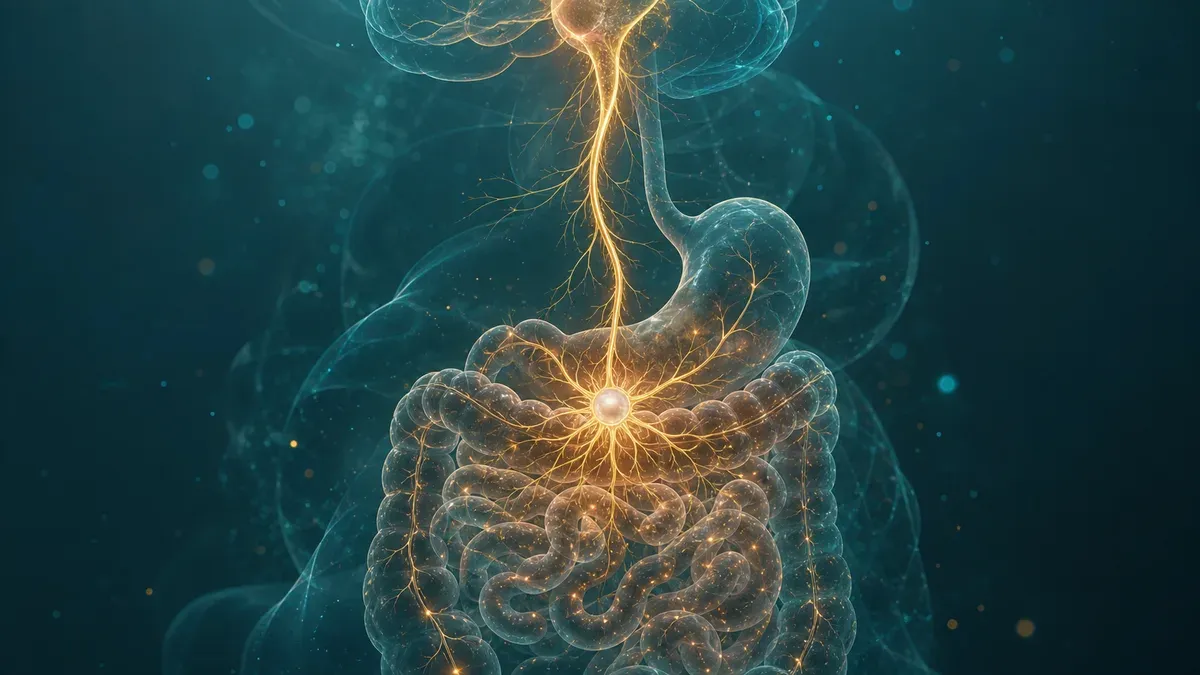
The vagus nerve creates a direct communication pathway between your brain and digestive system. When stressed, it reduces stomach acid production, slows gut movement, and redirects blood flow away from digestive organs.
Your stomach churns before a big presentation. You feel sick when worried. You get bloated during stressful weeks. This isn't coincidence. It's your vagus nerve. This nerve creates a direct highway between your brain and gut. It carries stress signals that change how your digestive system works1.
How Does the Vagus Nerve Connect Stress to Your Stomach?
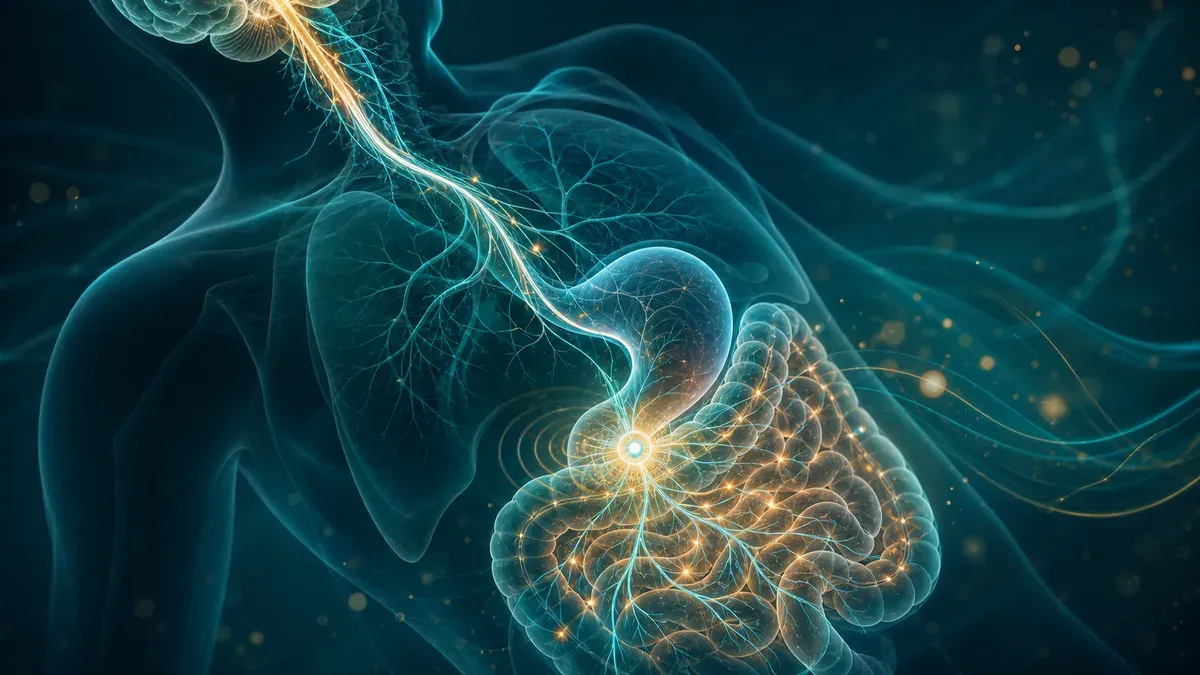
The vagus nerve is your body's longest cranial nerve. It runs from your brainstem down to your belly. It branches out to touch your heart, lungs, and digestive tract.
Think of it as a two-way communication cable. When your brain senses stress, it sends signals down this nerve in real-time. You can feel these digestive changes within minutes of stress hitting. These signals change how your stomach and guts work.
Here's the thing: this connection evolved for survival. When our ancestors faced danger, their bodies needed to shut down digestion. They had to redirect energy toward escaping threats. That same system fires today when you're stressed about deadlines or relationships.
What Happens to Digestion When Stress Hits?
Stress flips a biological switch. Your nervous system shifts from "rest and digest" mode to "fight or flight" mode. This change weakens your vagus nerve's ability to keep digestion running smoothly.
During stress, your body:
Reduces stomach acid production
Slows gut movement (the muscle squeezes that move food along)
Sends blood flow away from digestive organs
Increases swelling in the gut lining
The result? Food sits longer in your stomach. Nutrients absorb poorly. You might feel bloated. You might feel sick. You might get that "pit in your stomach" feeling.
While a single stressful event might cause brief stomach upset, repeated stress creates lasting changes. Long-term stress makes this worse. Your vagal tone -- how well your vagus nerve works -- weakens over time. This creates a cycle. Your digestive system becomes more sensitive to stress.
Why Does Long-Term Stress Change Your Gut?
Long-term stress doesn't just pause digestion for a while. It rewires how your vagus nerve responds.
When stress becomes long-term, your vagal tone stays low. Think of it like a dimmer switch stuck in the low position. Your digestive system can't fully return to the calm state. It needs this calm state for proper function3.
This explains why people with long-term stress often develop:
Gastroparesis (slow stomach emptying)
More gut swelling
Worse conditions like IBS
Poor nutrient absorption
Changes in gut bacteria balance
The vagus nerve also controls your gut's immune responses. Weak vagal function means your digestive system stays in a low-grade swollen state. This makes it more reactive to foods and stress4.
Can You Reverse Stress-Related Digestive Problems?
The good news? Vagal tone is trainable. Just like muscle strength, you can improve how well your vagus nerve works.
Building vagal tone helps restore the "rest and digest" state. Your gut needs this state. When your vagus nerve works better, it can:
Increase stomach acid production back to healthy levels
Improve gut movement and reduce bloating
Lower swelling in your digestive tract
Boost nutrient absorption
Many people use techniques like slow breathing. The 4-7-8 breathing technique practiced for 5 minutes twice daily may help support vagal tone. This involves inhaling for 4 counts, holding for 7, then exhaling for 8. Others try cold exposure for 30 seconds to 2 minutes daily. Some use vagus nerve stimulation devices. These may help support vagal tone.
The key is regular practice. Your nervous system responds to daily habits over time. Some people notice digestive symptoms improve within days of better stress management. Others need weeks to see changes. This is especially true if they've dealt with long-term stress for years.
The bottom line? Your stomach's reaction to stress isn't weakness or imagination. It's a real body response driven by your vagus nerve. Understanding this gut-brain connection is the first step toward breaking the stress-digestion cycle.
Talk to your doctor before starting any new wellness practice. This is especially important if you have ongoing digestive issues.
Frequently asked questions
How does stress affect digestion through the vagus nerve?
When you're stressed, your vagus nerve shifts your body from 'rest and digest' to 'fight or flight' mode. This reduces stomach acid production, slows gut movement, and redirects blood flow away from digestive organs. The result is poor digestion, bloating, and that 'pit in your stomach' feeling.
Can strengthening your vagus nerve help with stress-related stomach problems?
Research suggests that building vagal tone may help restore healthy digestive function by supporting the 'rest and digest' state. However, individual responses vary, and persistent digestive issues require medical evaluation to rule out underlying conditions.
How quickly does stress affect your stomach through the vagus nerve?
The vagus nerve carries signals between your brain and gut in real-time, so you can feel digestive changes within minutes of experiencing stress. However, long-term effects develop over days to weeks of repeated stress exposure.
What are the signs that stress is affecting your digestive system?
Common signs include stomach churning before stressful events, feeling nauseous when anxious, bloating during busy periods, changes in bowel habits with stress, and feeling like food sits in your stomach longer than normal.
Why do I get heart palpitations after eating — is it the vagus nerve?
Heart palpitations after eating can be vagus nerve-related. The vagus nerve runs close to the esophagus and stomach, so a full stomach or bloating can physically stimulate it, causing temporary heart rate changes. Gastric distension, acid reflux, and food sensitivities can also trigger vagal responses that affect heart rhythm. If palpitations are frequent or severe, see a doctor to rule out cardiac issues, but mild post-meal palpitations are often vagally mediated.
The Vagus Lab Research Team reviews the latest scientific evidence on vagus nerve stimulation and translates it into accessible health education content.