Wondering what actually works for your vagus nerve?
Can One Nerve Really Control Your Entire Digestive System?
Evidence-reviewed by Vagus Lab Research Team |Last updated July 8, 2026|7 min read
The vagus nerve directly controls stomach muscle contractions, acid production, and signals between your brain and gut. Poor vagal function is linked to chronic constipation and sluggish digestion.
That bloated, sluggish feeling after meals that fiber and probiotics can't fix? Research suggests the vagus nerve influences your stomach muscle contractions, acid production, and the signals between your brain and gut. Studies reveal that poor vagal function links to long-term constipation and sluggish digestion. Vagal tone measures how active this key pathway is. Better vagal tone may help support smoother digestive processes.
How Does Your Vagus Nerve Actually Run Your Stomach?
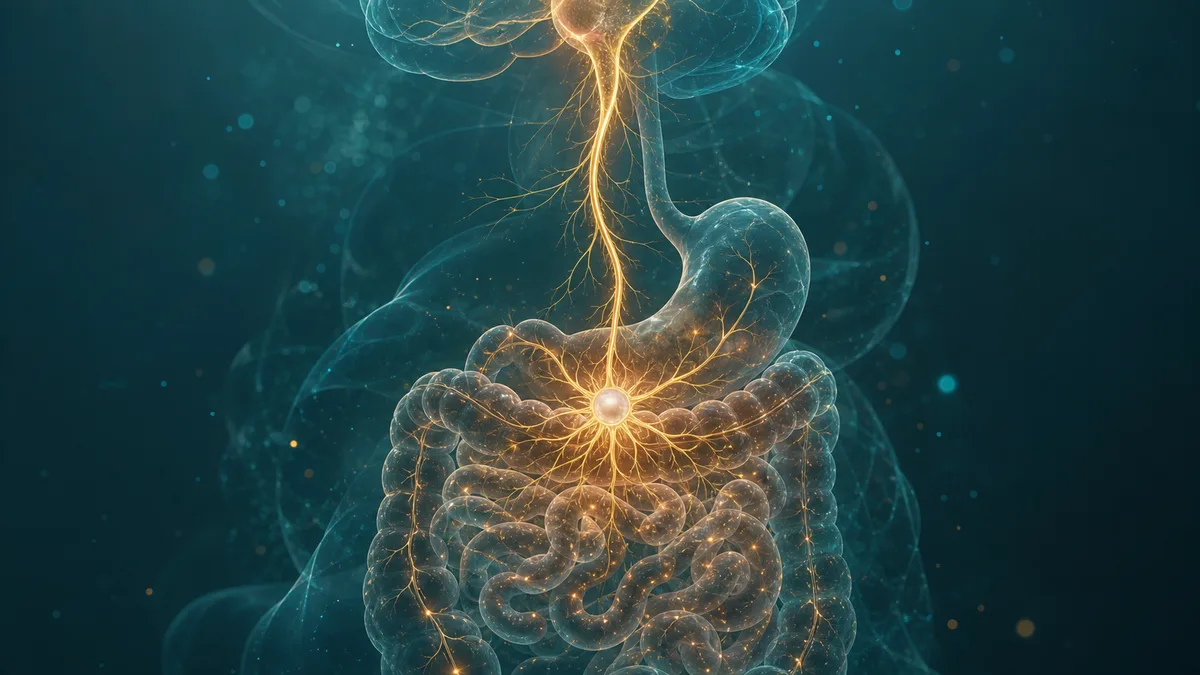
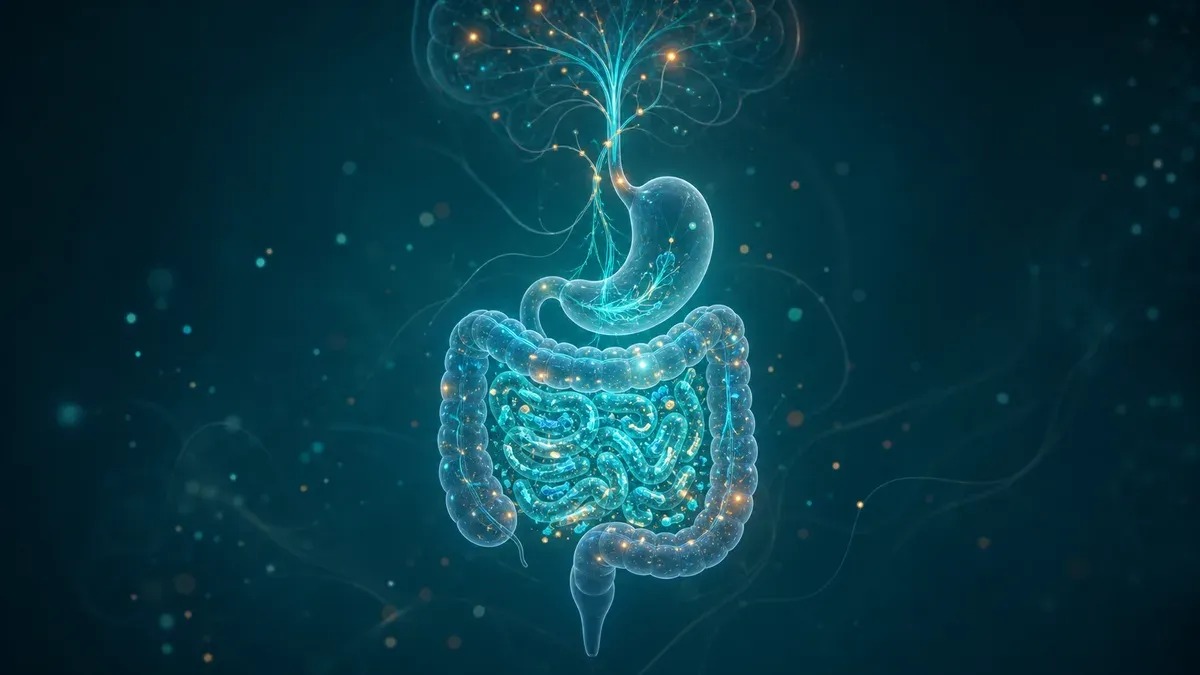
Your vagus nerve acts like a control center for your digestive system. It sends signals that tell your stomach muscles when to contract. It also controls how fast to move food along.
A 2025 study found that stimulating the vagus nerve directly enhanced gastric motility in lab animals1. The nerve controls the pyloric sphincter. That's the valve between your stomach and small intestine. It does this through specific neural pathways2. When this nerve fires properly, food moves through your system at the right pace.
Think of it this way: Your vagus nerve is like a traffic control system where each vagal signal times the digestive muscle contractions to keep food flowing smoothly through each section. Poor vagal tone means the signals are mistimed. This leads to sluggish or erratic digestion.
Your vagus nerve doesn't just control your stomach. It creates a communication highway between your brain and liver. This brain-liver axis helps regulate metabolism and digestive health. Recent 2025 research shows that vagal pathways mediate important metabolic signals between these organs4. Your liver processes nutrients and toxins. But it needs constant communication with your brain about energy needs and metabolic status.
When vagal tone is poor, this communication breaks down. Your brain might not get accurate signals about blood sugar levels. It might miss signals about nutrient processing. This can affect everything from appetite regulation to energy levels after eating. The vagus nerve helps your brain and liver stay in sync about your body's metabolic needs. This explains why some people with poor vagal tone experience post-meal fatigue or brain fog - the brain isn't getting clear signals about nutrient processing status.
But here's where it gets interesting:
What's Really Behind Your Long-Term Constipation?
Most people blame diet or hydration for constipation. But one factor might be higher up. It's in your nervous system.
A 2022 clinical study examined patients with long-term constipation that didn't respond to treatment3. Researchers found that many of these patients had impaired vagal function. This affected their colonic motility. The colon wasn't getting proper nerve signals to coordinate muscle contractions.
Your vagus nerve influences your entire digestive tract. When vagal signals weaken, the whole system slows down. Food sits longer in your stomach. Your colon doesn't contract well. This explains why some people with long-term constipation also have bloating, nausea, and early fullness after eating.
And that changes everything about how we think about digestive health.
How Do Scientists Actually Measure This Invisible Controller?
Measuring vagal function in digestive studies isn't straightforward. Unlike heart rate variability, there's no simple home test for digestive vagal tone.
Researchers assess vagal function through colonic motility testing. They also use neurological evaluation. They might measure how quickly food moves through your digestive tract. Or test how well your digestive muscles respond to nerve stimulation.
Some studies use autonomic function tests. These measure your nervous system's response to different challenges. But most detailed research on vagal tone and digestion happens in lab settings. They use animal models.
Quick Check - Signs of Poor Vagal Digestive Function: - Long-term constipation despite adequate fiber - Bloating that doesn't respond to diet changes - Feeling full after just a few bites - Nausea without obvious cause - Irregular bowel patterns - Post-meal fatigue or brain fog
This is why human data on vagal tone and digestion is still limited. The measurement techniques are complex. They often need specialized medical equipment.
So what does this mean for you?
What Can You Actually Do About It?
While most research happens in labs, some practical approaches may support vagal function for digestive health.
Deep breathing exercises can activate your vagus nerve through the diaphragm. Try the 4-7-8 breathing technique for 5 minutes before meals. Breathe in for 4 counts, hold for 7, exhale for 8. The nerve runs close to your diaphragm. Slow, controlled breathing may stimulate vagal activity.
Cold water exposure might also help. Try cold water face plunges for 30 seconds to activate your vagal response.
The vagus nerve responds to certain physical stressors. It does this by activating the parasympathetic nervous system. That's your "rest and digest" mode. Some people explore vagus nerve stimulation approaches for supporting calm and overall wellness. If you're considering these options, vagus nerve stimulation devices for calm target the same nerve pathways involved in gut function.
While more research is needed for digestive benefits, these approaches target the same nerve pathways involved in gut function. For those looking to support digestive wellness naturally, 6 simple vagus nerve exercises may help activate the same pathways involved in healthy digestion. Consistent sleep and stress management also matter. Long-term stress suppresses vagal activity. This can slow digestion and worsen gut symptoms.
Talk to your doctor before starting any new wellness practice. This is especially important if you have long-term digestive issues.
Frequently asked questions
How does the vagus nerve control digestion?
The vagus nerve sends signals that control stomach muscle contractions, regulate the pyloric sphincter between your stomach and small intestine, and coordinate food movement through your digestive tract. It acts like a conductor directing digestive muscles to work together for proper gut motility.
Can vagus nerve problems cause chronic constipation?
Research suggests impaired vagal function may contribute to chronic constipation that doesn't respond to traditional treatments. A 2022 study found many patients with treatment-resistant constipation had weakened vagal signals affecting colonic motility and muscle coordination throughout the digestive tract.
How do doctors test if your vagus nerve is causing digestive problems?
Signs may include chronic constipation despite adequate fiber intake, persistent bloating unresponsive to diet changes, feeling full after small meals, unexplained nausea, irregular bowel patterns, and post-meal fatigue. These symptoms can have multiple causes requiring medical evaluation.
How can I strengthen my vagus nerve for better digestion?
Deep breathing exercises, cold water exposure, stress reduction, and consistent sleep may support vagal activity. The vagus nerve runs near the diaphragm, so slow breathing may stimulate vagal function. However, more human research is needed for digestive-specific benefits.
Can a hiatal hernia affect the vagus nerve and cause digestive problems?
Yes, a hiatal hernia can compress or irritate the vagus nerve where it passes through the diaphragm alongside the esophagus. This can disrupt vagal signaling to the stomach, potentially causing nausea, bloating, early satiety, heart palpitations after eating, and acid reflux. Some people find that addressing the hiatal hernia (through manual therapy or surgery) improves both digestive and vagus nerve-related symptoms.
The Vagus Lab Research Team reviews the latest scientific evidence on vagus nerve stimulation and translates it into accessible health education content.