Can One Nerve Really Control Your Emotional Balance?
Ever wonder why your mood crashes after a stressful day, but a few deep breaths can turn things around? The answer lies in a single nerve that acts as your body's master conductor, orchestrating the complex symphony between your physical state and emotional wellbeing.
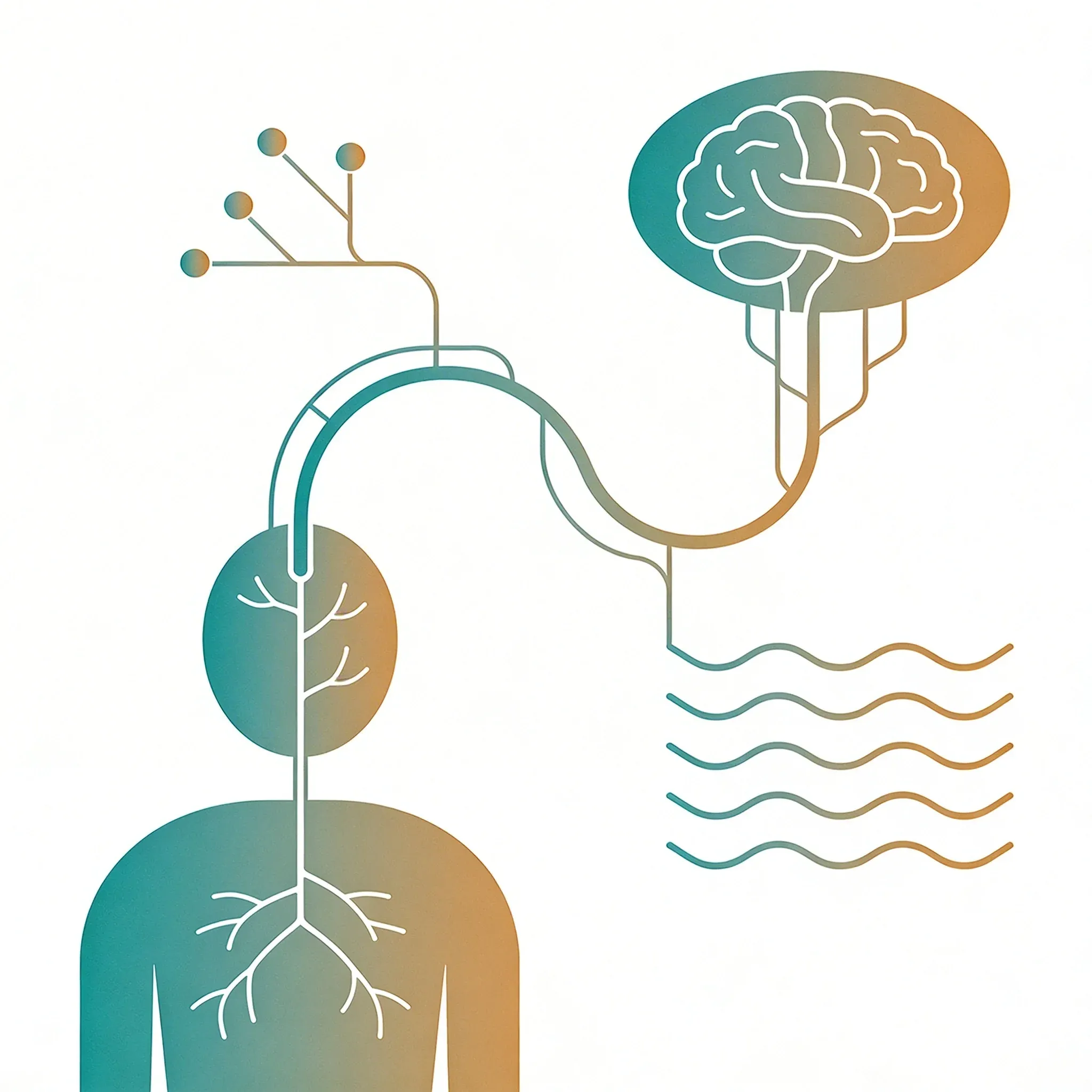
Your vagus nerve acts as the main communication highway between your brain and body, directly influencing mood through its control of key neurotransmitters like serotonin and GABA. This nerve helps regulate your stress response system and supports emotional balance by activating your parasympathetic "rest and digest" mode.
What Role Does the Vagus Nerve Play in Your Emotional System?
Picture your vagus nerve as your body's master conductor, coordinating signals between your brain's command center and every major organ system. Just as a conductor keeps an orchestra in harmony, this longest cranial nerve runs from your brainstem down to your abdomen, connecting to your heart, lungs, and digestive tract along the way.
When your vagus nerve is active, it raises the conductor's baton to slow the tempo. Your heart rate decreases. Your breathing deepens. Your muscles release tension. But this conductor doesn't just manage physical performance.
This nerve doesn't just control physical responses. It directly influences the production of chemicals in your brain that affect how you feel.
Higher vagal tone -- meaning stronger vagus nerve activity -- links to better emotional regulation and stress resilience. People with stronger vagal tone tend to bounce back from stress faster and show lower rates of anxiety and depression.
How Does Your Vagus Nerve Affect Brain Chemistry?
Your vagus nerve has a direct line to your mood through neurotransmitters. These are the chemical messengers that carry signals between nerve cells in your brain.
The nerve influences production of serotonin, often called the "happiness chemical." Here's the surprising part: about 90% of your body's serotonin gets made in your gut, not your brain. Your vagus nerve carries these gut-produced serotonin signals up to your brain through what scientists call the gut-brain axis.
Key insight: 90% of your body's serotonin is produced in your gut and travels to your brain via vagal pathways -- making your digestive health crucial for mood regulation.
This nerve also affects GABA production. GABA is your brain's main calming neurotransmitter. It helps quiet overactive brain circuits that can lead to anxiety and racing thoughts.
When your vagus nerve fires properly, it supports healthy levels of both chemicals. When vagal tone is low, this communication system doesn't work as well.
Why Does the Gut-Brain Connection Matter for Your Mood?
Your digestive system isn't just about processing food. It's actually your body's second nervous system, with more nerve cells than your spinal cord.
This "second brain" in your gut produces most of your body's serotonin. But that serotonin can't cross into your brain on its own. It needs the vagus nerve to carry the message upward.
Here's the thing:
Your gut bacteria play a role too. These microbes can influence serotonin production in your intestines. A 2024 study found they interact with the cyclic adenosine monophosphate-protein kinase A signaling pathway, which may affect both neurological function and mood1.
When your vagus nerve connection is strong, this gut-brain communication flows smoothly. When it's weak, the messages get muddled. That's one reason digestive issues and mood problems often show up together.
For example, eating fermented foods like yogurt, kefir, or sauerkraut may support beneficial gut bacteria that produce compounds your vagus nerve can relay to your brain for mood regulation.
How Does Vagus Nerve Activity Affect Your Stress Response?
Your vagus nerve acts like the conductor's ability to bring a chaotic orchestra back into harmony. When you face a threat, your sympathetic nervous system cranks up the volume -- releasing stress hormones, speeding up your heart, and preparing you to fight or flee.
The vagus nerve is what tells your body when the performance has ended and it's time to take a bow. It activates your parasympathetic system, which counteracts the stress response.
But there's another layer here:
Chronic stress creates chronic inflammation in your body. This ongoing inflammatory state is linked to depression and other mood disorders. Your vagus nerve helps control this inflammatory response through what researchers call the "inflammatory reflex."
When vagal tone is high, your body manages inflammation better. When it's low, inflammation can spiral upward, potentially affecting mood and emotional regulation.
The bottom line? A well-functioning vagus nerve helps you shift out of stress mode faster and keeps inflammation in check. Both of these support better emotional balance.
Can You Strengthen Your Vagus Nerve for Better Mood?
Certain practices may support vagal tone, though the science is still developing.
Breathing techniques show particular promise. Slow, deep breathing -- especially longer exhales -- can activate your vagus nerve and shift your nervous system toward calm. A 2005 study of yogic breathing practices found significant reductions in stress, anxiety, and depression symptoms2.
Try this 60-second vagus nerve reset:
1. Inhale through your nose for 4 counts
2. Hold for 2 counts
3. Exhale slowly through your mouth for 8 counts
4. Repeat 3-4 times The key is making your exhale longer than your inhale.
The key seems to be the exhale. When you breathe out slowly, you're directly stimulating vagus nerve pathways that signal safety to your brain.
Other approaches that may support vagal function include:
- Cold water exposure (activates the dive reflex)
- Gentle neck stretches and yoga
- Singing, humming, or gargling
- Heart rate variability training
Some people also explore vagus nerve stimulation devices, though more research is needed on their specific effects for mood support.
Remember: these practices are supportive, not therapeutic. If you're dealing with persistent mood changes, anxiety, or depression, talk to a healthcare provider about your options.
What Does This Mean for Your Daily Life?
Understanding your vagus nerve gives you a new way to think about emotional wellness. Instead of seeing mood as something that just happens to you, you can recognize it as partly influenced by this nerve-body connection.
Understanding the timing becomes crucial: knowing when to activate your vagus nerve can be particularly helpful during stressful moments. A few slow, deep breaths with long exhales might help you shift out of fight-or-flight mode faster.
The plot thickens:
The gut connection also highlights why taking care of your digestive health matters for mood. What you eat, how you manage stress, and even your sleep patterns all affect this gut-brain communication pathway.
This isn't about perfect control over your emotions. It's about understanding one of the key systems that influences how you feel -- and recognizing that you have some influence over that system.