Ever notice how stress makes your stomach feel tied in knots? Or how a big meal sits like a rock when you're anxious? There's a reason for that. Your vagal tone controls the rhythmic movements that move food through your gut. Strong vagal tone helps your gut muscles work smoothly. Weak vagal tone slows digestion and makes food sit too long in your stomach.
What Is Vagal Tone and Why Does It Matter for Digestion?
Think of vagal tone like muscle strength. But instead of your biceps, it's for your vagus nerve. Strong vagal tone helps your gut work better.
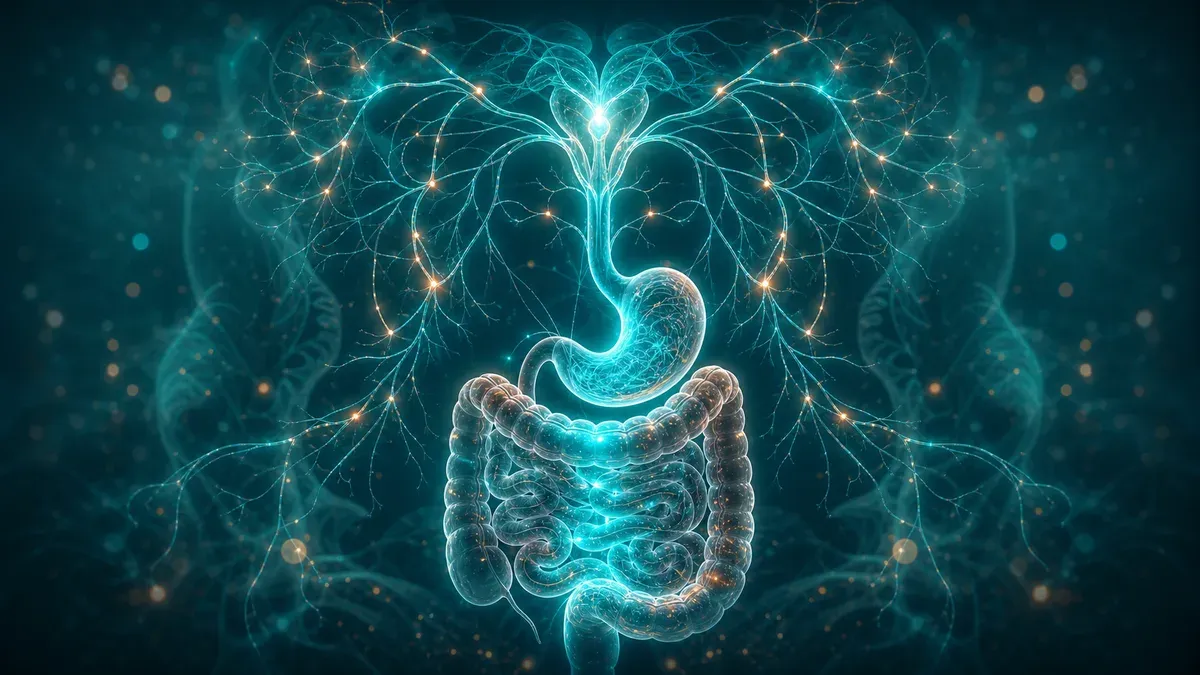
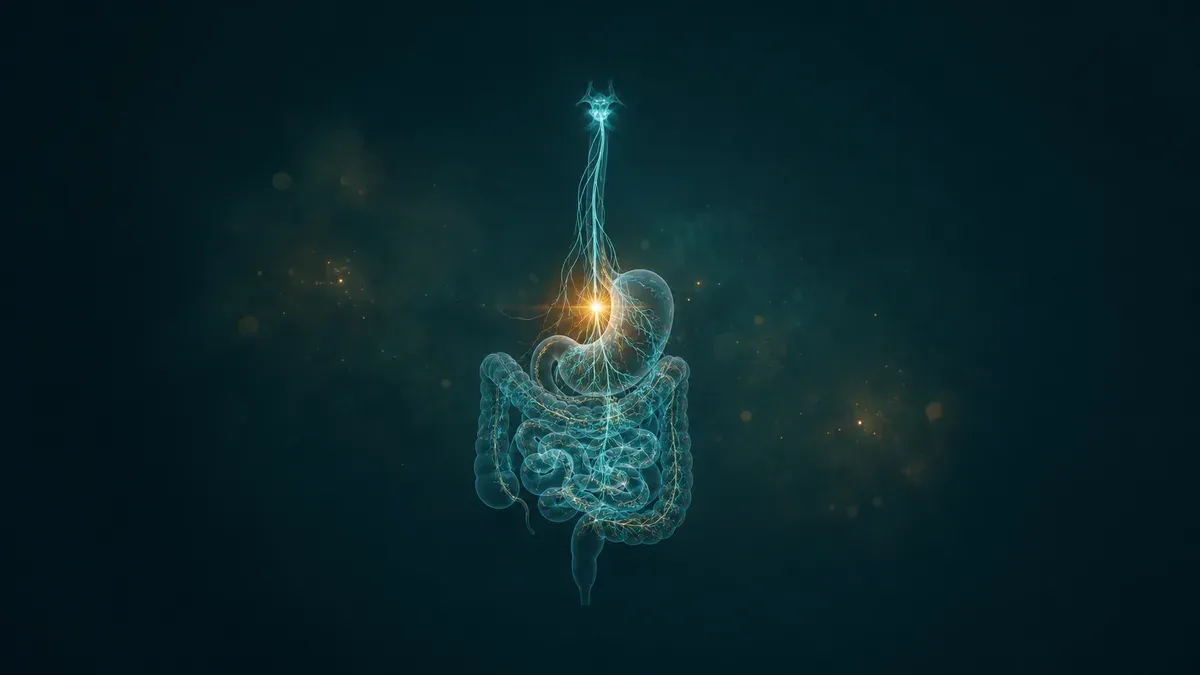
Your vagus nerve runs from your brainstem down to your belly. It branches out to your stomach, small gut, and colon. This nerve is the main line between your brain and your gut.
When vagal tone is high, your gut gets clear, strong signals. The nerve tells your stomach when to release acid. It coordinates the wave-like muscle squeezes that push food through your gut. It even helps your gut bacteria talk to your brain.
How Does the Vagus Nerve Control Gut Movement?
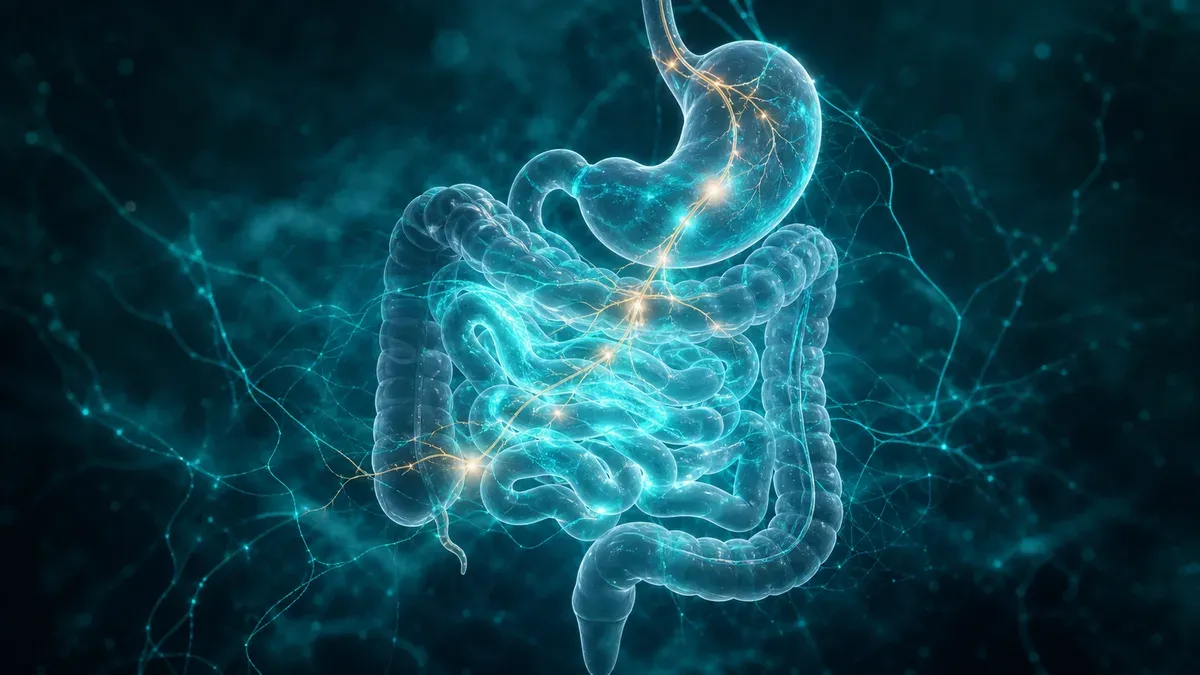
Your vagus nerve controls digestion through your gut's own "mini brain." This network of nerves in your gut walls controls all the muscle squeezes that move food along.
Here's where it gets interesting:
The vagus nerve sends signals to this gut brain. These signals trigger coordinated muscle squeezes called peristalsis.
What is peristalsis? Like squeezing toothpaste from the bottom
- but imagine the tube coordinates each squeeze with perfect timing. Muscles squeeze behind the food and relax in front of it. This rhythm moves everything from your throat to your colon.
Between meals, your vagus nerve controls something called the migrating motor complex. This is a powerful wave that sweeps through your gut every 90 minutes or so. It clears out leftover food bits and bacteria.
When vagal tone is strong, these processes run smoothly. Food moves at the right pace. Your stomach empties well. Waste moves through your colon easily.
But what happens when this finely-tuned system starts to break down? When the coordination falls apart, you'll feel it quickly in your gut.
What Happens When Vagal Tone Is Too Low?
Now that you understand how the vagus nerve orchestrates your gut's movements, let's explore what happens when this system breaks down. Poor vagal tone can throw off your entire gut rhythm. Without strong vagal signals, your gut muscles don't work together well.
But there's a catch:
This may lead to several issues that sound familiar if you've dealt with gut discomfort:
Slower stomach emptying. Food sits in your stomach longer than it should. You might feel full for hours after eating. Or you get that heavy, bloated feeling.
Slower gut transit. The wave-like squeezes that move food through your small and large gut become weaker. They don't coordinate as well.
Disrupted cleansing waves. Those powerful waves between meals may not happen regularly. Undigested food and bacteria can build up in your gut.
Smooth food movement: Low Vagal Tone: Food sits too long in stomach
Regular bowel movements: Low Vagal Tone: Irregular or delayed elimination
Comfortable after meals: Low Vagal Tone: Bloating, heaviness after eating
Strong cleansing waves: Low Vagal Tone: Incomplete clearing between meals
Some people with gut discomfort may have underlying issues with vagal tone. But this connection is still being studied.
Can You Strengthen Your Vagal Tone for Better Digestion?
Research suggests that certain practices may help support healthy vagal tone. While we can't directly measure vagal tone at home, some techniques show promise. They may support your "rest and digest" nervous system balance.
Try this 2-minute digestive reset:
1. Sit comfortably and place one hand on your chest, one on your belly
2. Breathe in through your nose for 4 counts, expanding your belly
3. Hold for 2 counts
4. Breathe out slowly through your mouth for 8 counts
5. Repeat 5 times, focusing on the longer exhale
Timing tip: Practice this breathing exercise 30 minutes before meals or between meals when your stomach is empty. This helps activate your "rest and digest" state before food arrives.
Cold exposure. Brief cold showers or splashing cold water on your face may activate the vagus nerve. This happens through what's called the dive reflex. Try cold exposure in the morning or at least 2 hours after eating, when your digestive system isn't actively processing food.
Meditation and mindfulness. These practices seem to shift your nervous system toward "rest and digest" mode. The vagus nerve controls this mode.
Regular exercise. Moderate physical activity may support overall nervous system balance. But the exact ways this works aren't fully understood.
When to Use Vagus Nerve Stimulation for Maximum Calm explores specific timing strategies for vagal practices.
Some people also use vagus nerve stimulation devices. These deliver gentle electrical pulses to the vagus nerve through the ear. Research on these devices is still developing. But early studies suggest they may support calm nervous system activity.
How Stress Affects Your Vagal Tone and Digestion
Here's the thing:
Stress and vagal tone have an opposite relationship. When stress goes up, vagal tone often goes down. This creates a cascade effect on your gut.
During stressful periods, your body focuses on "fight or flight" response. Blood flow shifts away from your gut organs. The vagus nerve's calming signals get overridden by stress hormones.
This is why you might notice gut issues during stressful times. Your food seems to sit like a rock in your stomach. You feel bloated or uncomfortable after meals. Your usual bathroom routine gets thrown off.
The good news? This connection works both ways. Practices that support vagal tone may help your body shift back into "rest and digest" mode more easily.
How Vagus Nerve Stimulation Boosts Your Heart Rate Variability explains how these same practices affect your overall nervous system balance.
Signs Your Vagal Tone Might Need Support
While you can't directly measure vagal tone at home, certain patterns might suggest your vagus nerve could use some support:
Gut symptoms: Feeling full quickly, food sitting heavy in your stomach, irregular bowel movements, or bloating after meals.
Stress response: Difficulty calming down after stressful events. Feeling "wired but tired." Trouble shifting into relaxation mode.
Sleep issues: Trouble falling asleep or staying asleep. This is especially true if your mind races when you lie down.
These symptoms can have many causes. But if you notice several of them together, supporting your vagal tone might be worth exploring.
Talk to your doctor before making big changes to address gut concerns. They can rule out underlying conditions and help you create a safe approach.